
Durability
The Cost of Corrosion in Concrete Structures
Corrosion in reinforced concrete is more than a material deterioration issue. It can become a significant long-term cost for infrastructure owners.
Oct 2026 · 5 min read
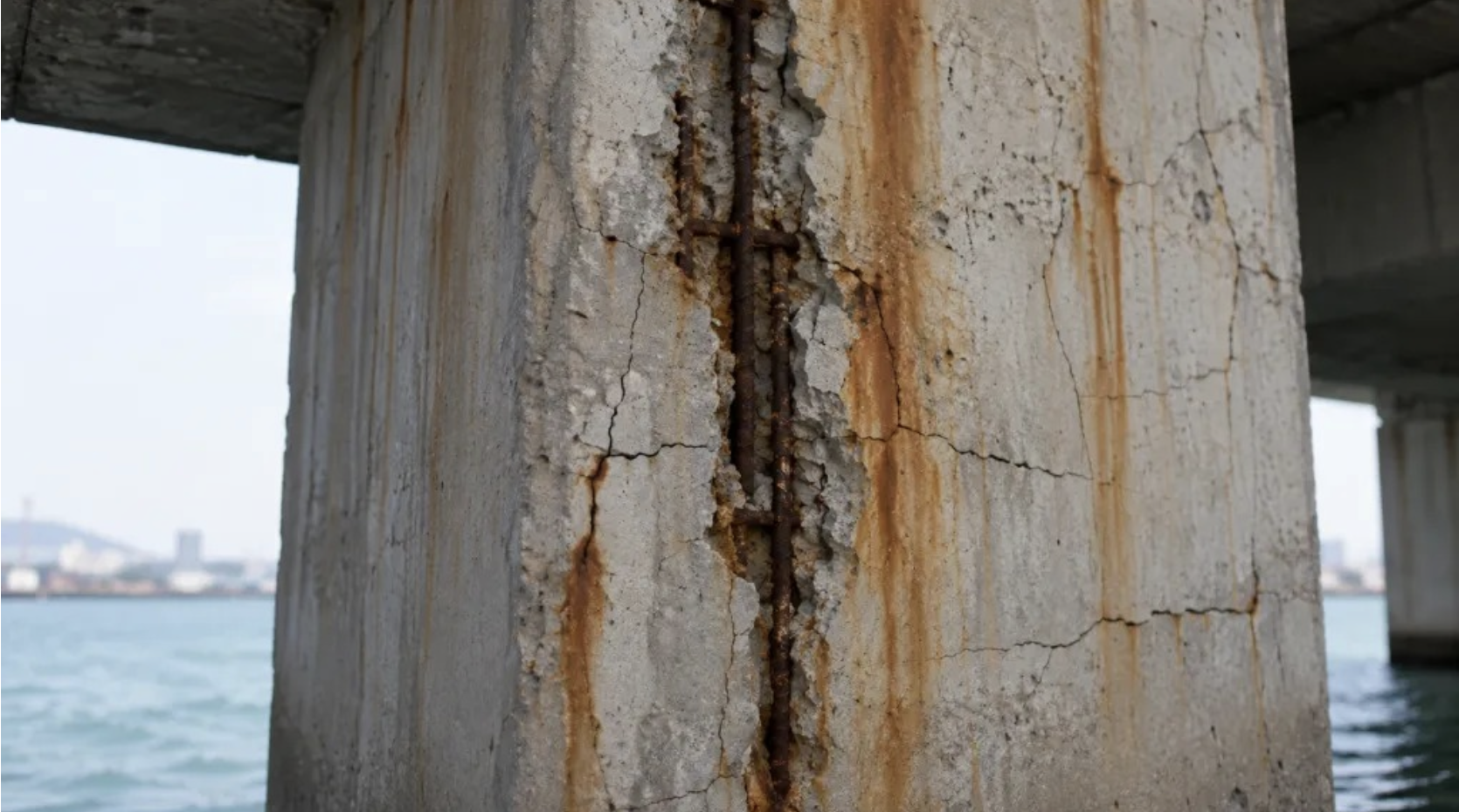
Corrosion in reinforced concrete is more than a material deterioration issue. It can become a significant long-term cost for infrastructure owners, affecting maintenance budgets, structural performance and the usable life of a structure.
When moisture, chlorides or carbonation reach the steel reinforcement, corrosion can begin beneath the concrete surface. As the steel deteriorates, corrosion products expand and create pressure within the surrounding concrete, leading to cracking, delamination and spalling.
The financial impact begins with identifying the problem. Inspection and condition assessment are followed by concrete removal, reinforcement treatment, repair and reinstatement. As the structure continues to age, these interventions may become recurring maintenance requirements.
There is also a cost beyond the repair itself. Bridges may require traffic restrictions, industrial facilities may face operational interruptions, and critical infrastructure can require additional access, equipment and planning during rehabilitation.
This is where corrosion becomes a lifecycle cost. The original construction investment represents only one part of the total cost of a structure. Inspection, maintenance, repair, disruption and rehabilitation can continue throughout its service life.
For long-life infrastructure, controlling corrosion is therefore not simply about protecting concrete from visible damage. It is about reducing the future cost of maintaining structural performance.
The cost of corrosion is ultimately measured not only by the damage it causes, but by everything required to manage that damage over the life of the structure.